Have you wondered what it’s like to be a member of the Thinking Ahead Institute? Perhaps you’re curious to find out more about the kind of work we collaborate with our members on? Our new monthly member spotlight series celebrates our valuable member base and showcases our collaborative work, from working groups to global studies.
Luba Nikulina, Chief Strategy Officer at IFM Investors, reflects on how embracing system‑level thinking, organisational truth‑telling and the fast‑converging forces of tech and geopolitics has reshaped their long‑term decision‑making and the way they navigate the future.
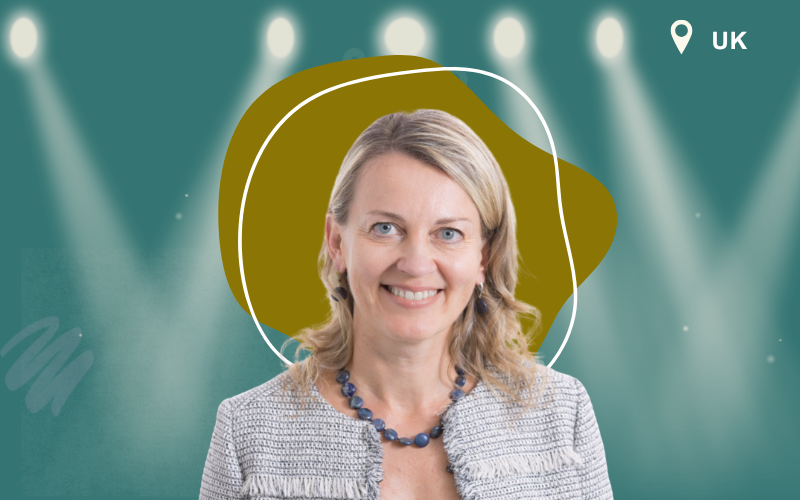
Over your five years with the Institute, what’s one shift in long‑term thinking that has fundamentally changed the way you approach decision‑making?
One of the most important shifts for me has been moving away from siloed thinking by asset class, function or mandate towards a much more system‑level perspective. Through the Institute, I’ve increasingly come to see that long‑term outcomes are shaped less by individual decisions in isolation and much more by how the overall system is designed, governed and allowed to evolve. That has changed the way I approach decision‑making. I now spend more time stepping back to ask what overarching problem we are really trying to solve, how different parts of the system interact, and where unintended consequences might arise.
What’s a concept or idea from the Institute that you initially underestimated but now find yourself returning to frequently?
How radical the Total Portfolio Approach really is. It is often presented as a technical evolution in portfolio construction, but in practice it is a profound challenge to how institutions are governed. Over time, I’ve come to see TPA as a mirror held up to organisations, exposing misaligned incentives, unclear decision rights, and cultural resistance to a more holistic approach. I return to it often because when institutions feel stuck, the issue is rarely about portfolios or assets; it’s the organisational architecture around them.
In your view, what emerging issue should the global institutional ecosystem be preparing for now that isn’t getting enough attention?
I think we are still underestimating how quickly technology, geopolitics, and capital markets are converging into a single system.
Many institutions continue to treat AI, geopolitical fragmentation, and industrial policy as separate themes. In reality, they are interacting forces that will reshape labour markets, productivity, national priorities, and capital allocation simultaneously. This raises uncomfortable questions about diversification, liquidity, and long‑term return assumptions, and I don’t think the institutional ecosystem has fully internalised how structural this shift may be.
Looking back, which collaboration, debate, or exchange within the Institute community has had the most lasting impact on your thinking – and why?
The candour of exchanges where people are willing to admit uncertainty. Some of the most valuable conversations I’ve had through the Institute were not about best practice, but about what isn’t working, weak governance, cultural constraints, and the gap between aspiration and execution. Those discussions have reinforced for me that long‑term investing is as much a human and organisational challenge as it is a financial one.
Finally, what’s on your shelf? Tell us what you’re either reading, watching or listening to.
I am currently reading Ray Kurzweil’s The Singularity Is Nearer, which I find both fascinating and unsettling. Whether or not one agrees with the timeline of changes predicted by Ray, it forces you to confront how quickly exponential technologies could disrupt long‑held assumptions about growth, productivity, and human decision‑making. Alongside that, I am deliberately spending more time on geopolitics and institutional design because the real question for long‑term investors isn’t whether technology will advance or geopolitics will disrupt, but whether our institutions are capable of adapting at the same pace.
Dive into our member spotlight series:
– Andrew Fisher, Head of Strategy at Australian Retirement Trust
– Yolanda Blanch Ruiz, Chairperson at Pensions Caixa 30
– Aaron Filbeck, Managing Director of Content & Community Strategy at CAIA Association
– Elsa Madrolle, Global Head of Commercial Engagement at SimCorp
– Herschel Pant, Head of Global Consultant Relations and Institutional, Core Client Group UK, AXA IM at BNP Paribas Asset Management